Talk Box - A Pragmatic Solution to Inclusive Psychiatric Care
A human-centred approach to supporting patient self-care and mental health management.
Role
UX/UI Designer
Industry
MedTech - Patient Self Service
Duration
6 Months - 2024
Introduction
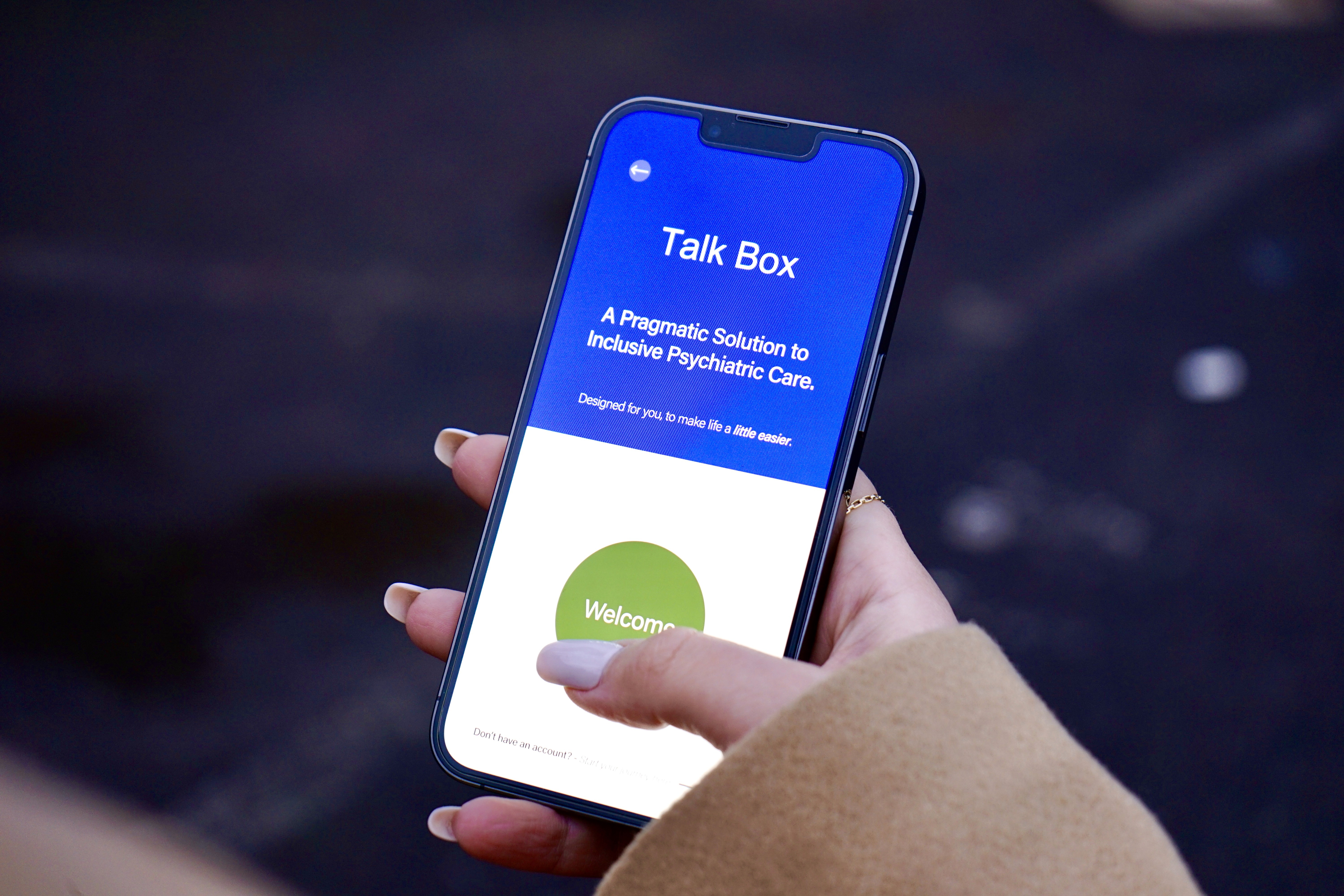
'A Non-Institutional & Stimulating Approach' - Talk Box was created as a joint initiative to support a modular psychiatric care model, outside the institutional realm, combining NHS-informed systems within a digital app and modular package that allowed patients to self-book therapy and engage in self-care, on demand.
Explore the case study: Talk Box - A Pragmatic Solution to Inclusive Psychiatric Care
Stage 1: Empathise
Developing the Talk Box narrative and product positioning involved examining the NHS psychiatric care journey as a patient, and competitor apps like Head Space, BetterHelp and Talk Space, to uncover system gaps and user pain points.
Competitive Audit & Market Research
Quantitative research to understand mental health realm (NHS surveys & reports).
Evaluate competitor products or services to identify strengths, weaknesses, and service gaps.
Benchmark against industry standards and best practices - Head Space, BetterHelp, Talk Space, Private therapy.
Data Synthesis
Identify user needs, problems, and opportunities from qualitative and quantitative data.
Explore user journey mapping, pain points and emotions throughout current experiences.
Explore empathy mapping to visualise thoughts and feelings.
Draft user personas to represent key users and their motivations.
Stage 2: Define
Research revealed that 59.4% of people in the UK experience depression, with long NHS wait times delaying access to care. Talk Box was developed as a patient-first digital platform to improve access to timely mental health support.
Problem Identification
Translate user insights into clear problem statements.
Define the core user challenges discovered during research.
Prioritise the most impactful user needs.
Distil research into specific user needs and motivations.
Ensure the design challenge is clear, actionable, and human-centred.
Stage 3: Ideate
The ideation phase established core product KPIs for Talk Box, prioritising efficient therapy booking, purposeful UI components, cohesive branding, and streamlined user journeys for accessing care.
Rapid Ideation Sketches, Wireframes, and User Flow Mapping
Brainstorm potential product solutions based on defined user needs (Rapid sketching).
Sketch early interface and component features.
Map user flows and interaction pathways (User journey flow).
Evaluate and prioritise ideas based on user needs, accessibility considerations, and technical feasibility.
Define the core product features and concept direction for prototyping.
Developed first stage wireframes (Screen layout, button placement & brand).
Stage 4: Prototype
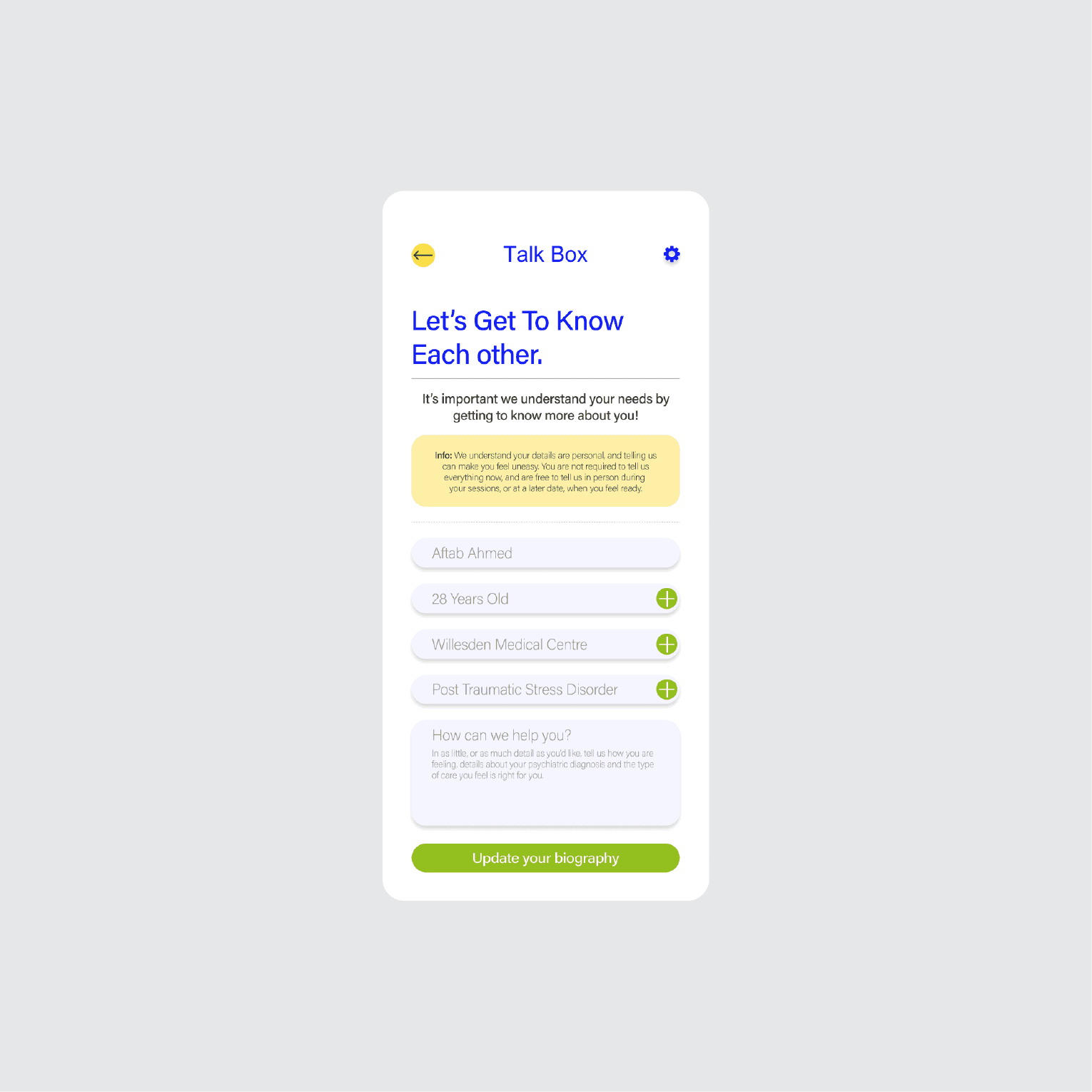
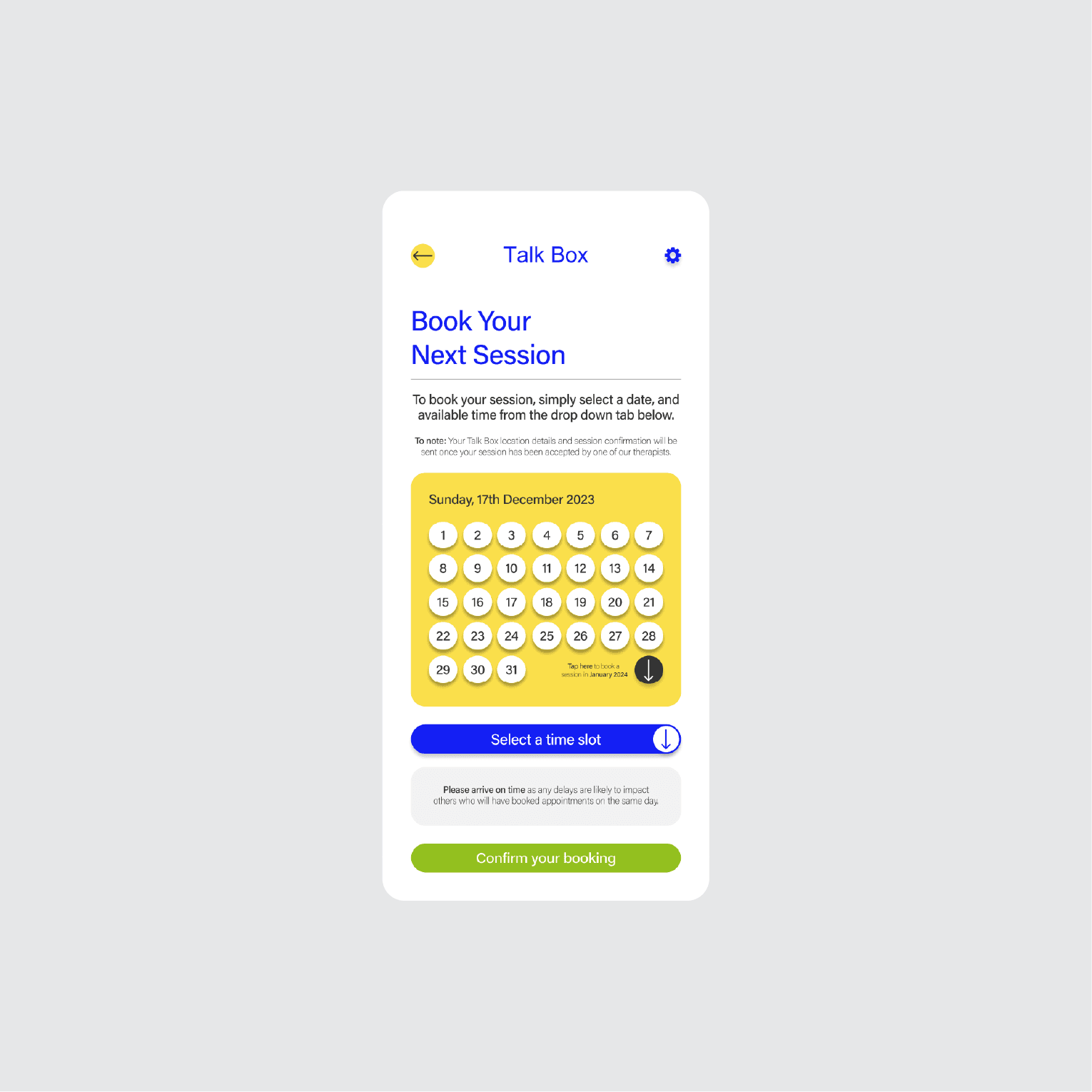
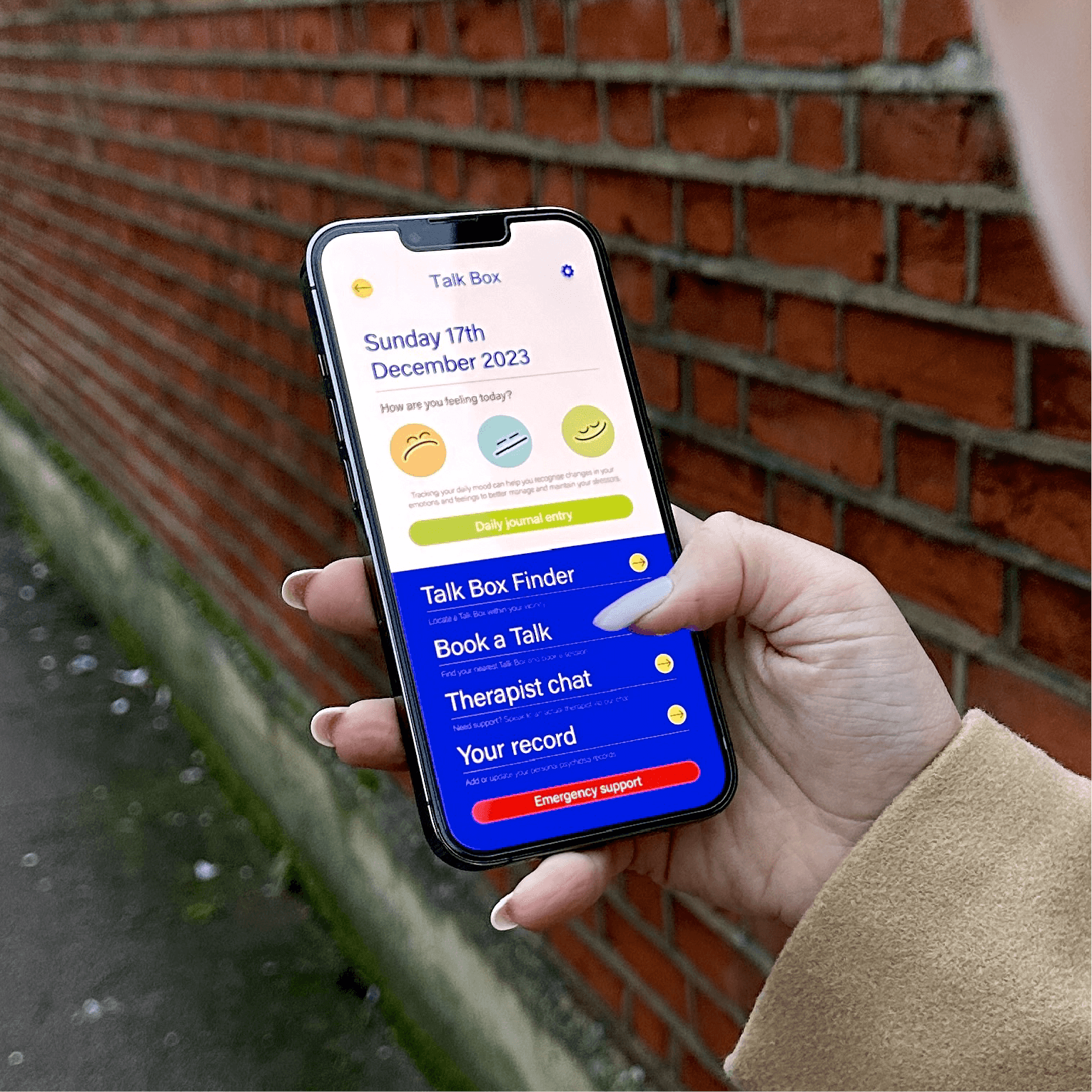
Early screen development focused on strategic component placement and clear interaction patterns to support efficient task completion. Visual hierarchy, created through colour and layout, guided users through the interface and improved navigation clarity.
Interface Design & Hi-Fidelity Prototyping
Developed Lo-Fidelity prototype to define structure, layout and components.
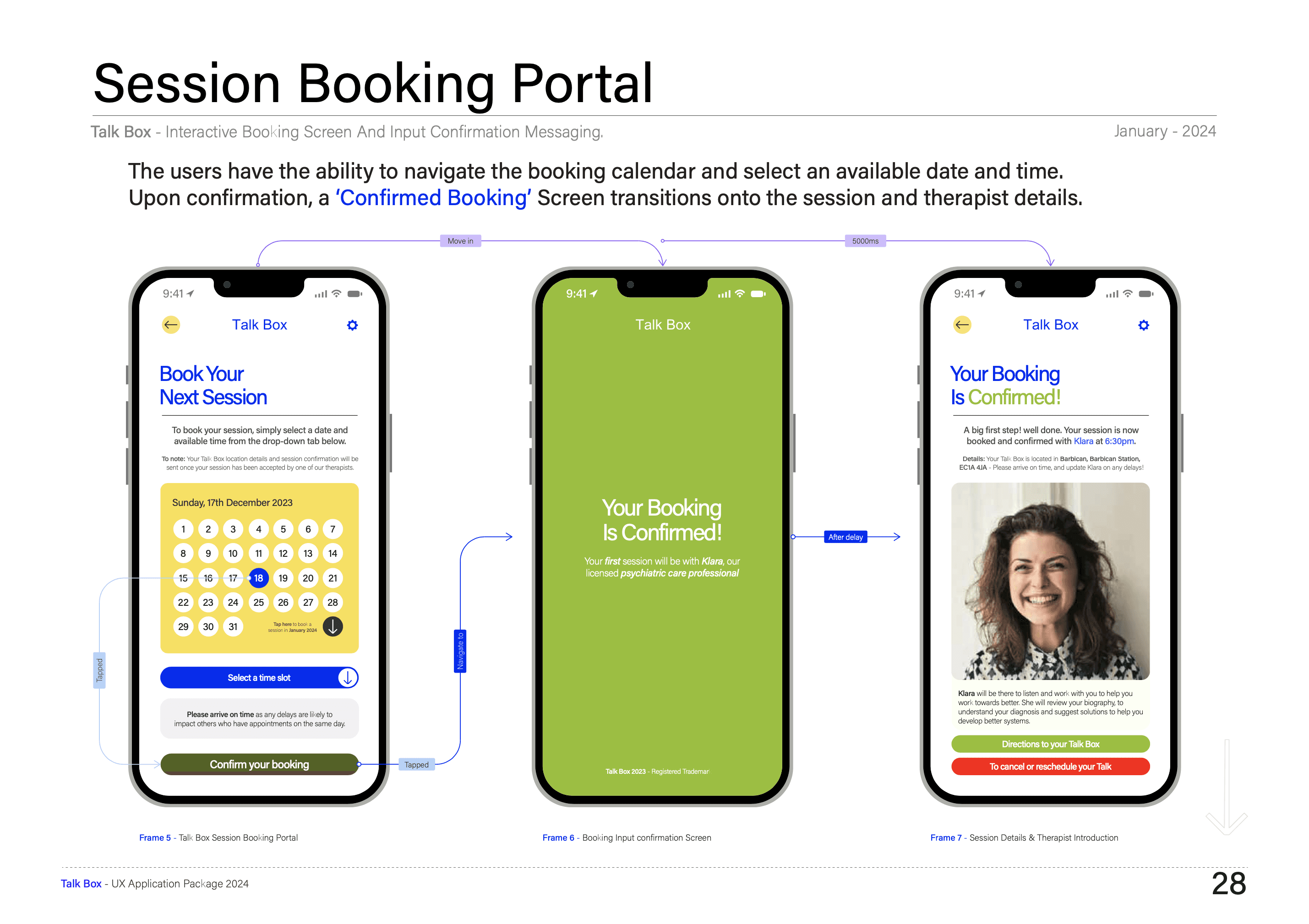
Designed core user flows and interaction patterns informed by evidence-based considerations.
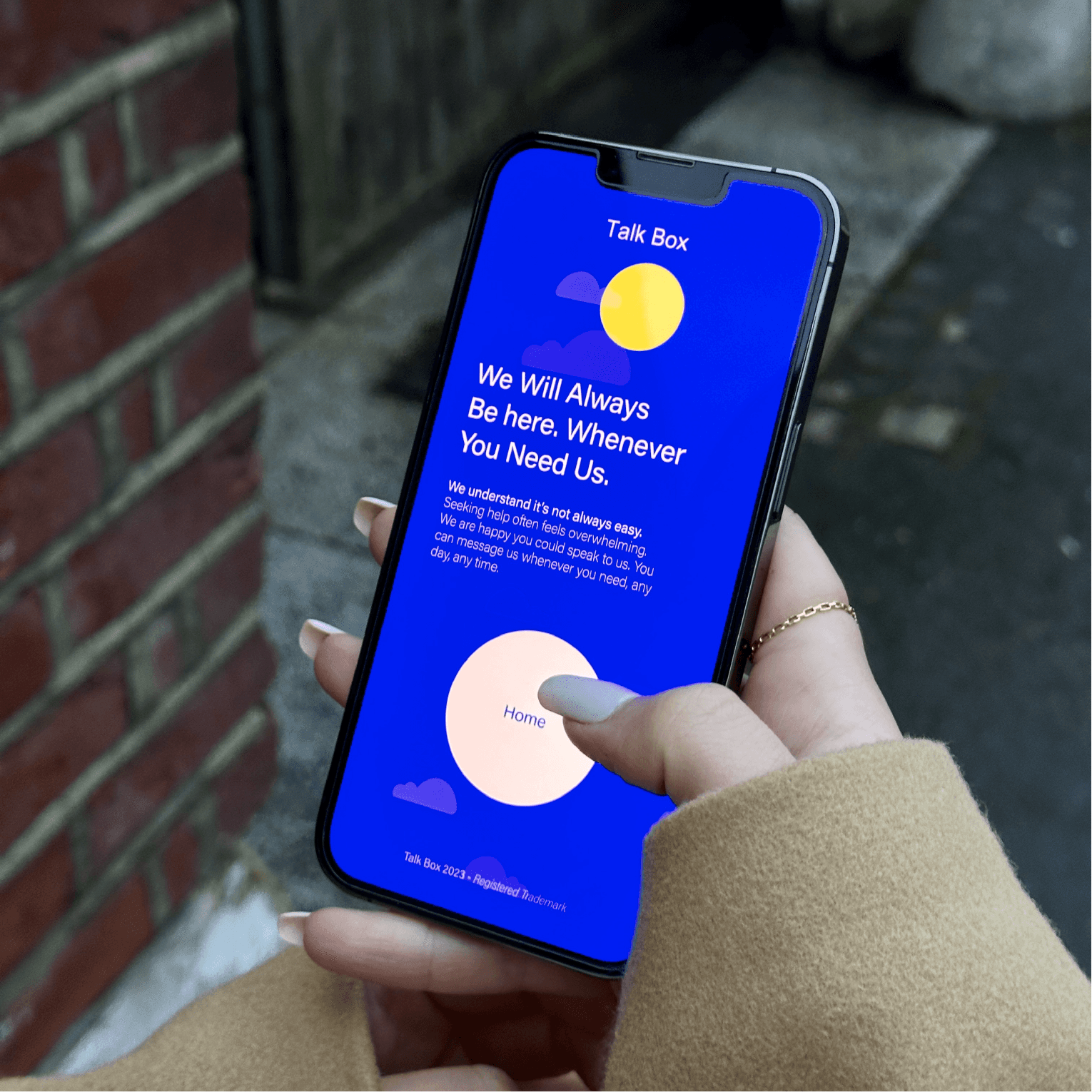
Created Hi-Fidelity UI screens and components aligned with the product brand.
Built an interactive prototype to simulate the therapy booking experience (Figma).
Prepared the prototype for usability testing and iteration.
Stage 5: Test
The Talk Box testing phase focused on validating the prototype with users, resolving usability issues, and iterating to achieve a user-centered, evidence-based design.
User Testing, Feedback, and Iteration
Observed interactions to identify usability issues and friction points.
Collected user feedback on navigation, accessibility, and experience.
Analysed testing insights to refine user flows and interface components.
Iterated the design to improve usability and task completion.
Conducted usability testing with target users to evaluate the prototype.